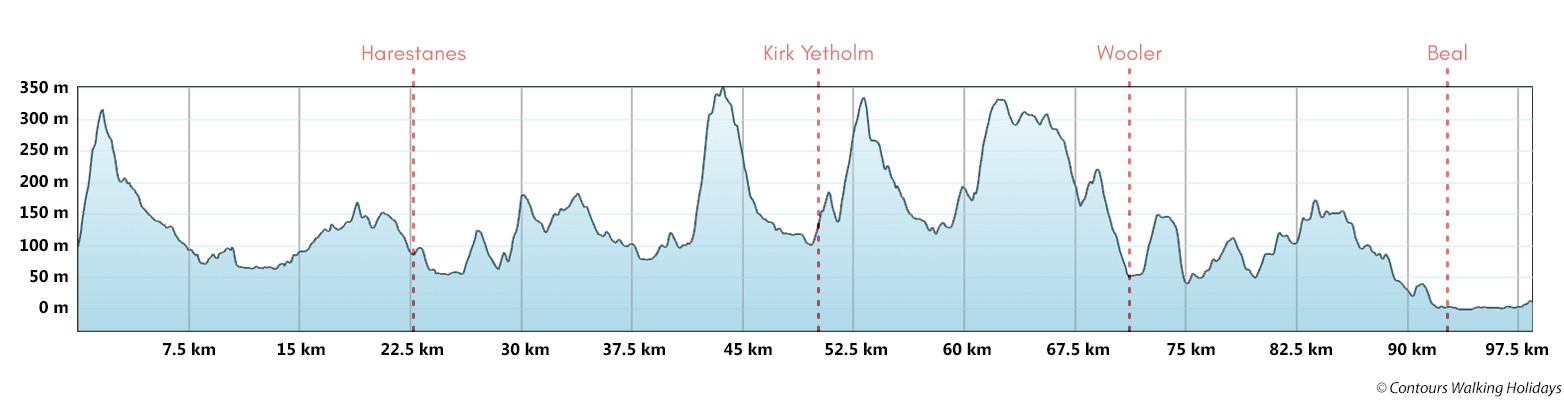
St Cuthbert's Way follows the story of a 7th century saint who travelled through Scotland and northern England, spreading the Gospel and performing healing miracles. Beginning at Melrose, where the saint started his ministry, and ending at Holy Island where he ended his days, the trail passes through scenery of great variety and beauty.
The walk takes in heather-clad hills, tranquil riverbanks and old Roman roads, visiting attractive villages and border towns along the way. Particular sites of interest include the ruin of Dryburgh Abbey, Cessford Castle, St Cuthbert's Cave and the Holy Island of Lindisfarne, complete with its ruined abbey and spectacular castle.
We offer multiple holiday options along this trail. If you wish to experience the entire trail and stay on Holy Island, simply select the Holy Island option from the list below.
.jpg)
 Dog friendly




.jpg)
.jpg)
.jpg)
.jpg)
.jpg)
.jpg)
.jpg)
.jpg)
.jpg)
.jpg)
.jpg)
.jpg)
.jpg)
.jpg)
.jpg)
.jpg)
.jpg)